
Critique of Humanities’ Marginalization
At the Australian Financial Review Higher Education Summit in August 2025, Simon Haines, former head of ANU’s School of Humanities and now an adjunct professor at ACU, delivered a strong defense of the humanities[1]. Haines praised Australian universities for doing “brilliantly” in professional training and research, but warned that their “third function – cultivating wisdom – [is] being marginalised, defunded and eviscerated”[2]. He argued that undermining the humanities is “essentially a destruction of the core of what… universities… were for”[3]. Haines pointedly singled out his former institution, saying “I’m looking at you, ANU,” in criticism of ANU’s plans to “defund the humanities”[4]. He noted recent cuts at ANU, including a two-thirds budget reduction for a humanities research center and the winding down of its School of Music, as emblematic of this trend[5]. Such moves, he implied, betray the university’s role in cultivating broad wisdom and human insight.
Panel Discussion with Academic Leaders
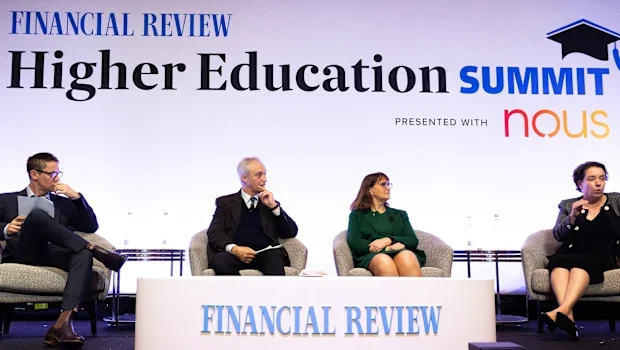
Haines also joined a high-profile panel discussion at the summit, appearing alongside University of Melbourne professor Adrienne Stone and Griffith University vice-chancellor Carolyn Evans, with AFR editor-in-chief James Chessell as moderator[6]. The panel grappled with how universities should engage with contentious social and political issues. Stone, a renowned free speech expert, argued for “institutional silence” – advising that universities avoid official positions on hot-button topics (from global conflicts to same-sex marriage) so as not to stifle debate on campus[7]. Haines participated in this conversation about the balance between speaking out and preserving universities as forums for open discussion, underscoring his broader theme of protecting the university’s fundamental values.
Summit Themes: AI, Governance and Policy Shifts
Simon Haines’ remarks came amid a summit focused on the sector’s response to new challenges. Leaders urged universities to embrace artificial intelligence as a tool in teaching rather than fear it as “cheating”, as La Trobe University’s vice-chancellor put it, “Using AI is not cheating, it’s clever”[8]. At the same time, serious governance challenges were acknowledged: Federal Education Minister Jason Clare bluntly noted that anyone in denial about university governance problems “[has] been living under a rock”[9][10]. The summit also highlighted shifts in policy and practice, from plans to integrate AI training into all degrees within five years[11] to debates over funding models that have “priced students out” of arts degrees[12]. Amid discussions of mergers, curriculum reform, and restoring public trust, Haines’ call to defend the humanities and the pursuit of wisdom resonated as a crucial reminder of the university’s higher purpose.
Full AFR press coverage of the summit (PDFs) is available below.[13]
[1] [3] AFR 20 August 2025 Page_55.pdf
[2] [4] [5] [8] [9] [10] [12] [13] FrontPageAFR 20 Aug 2025.pdf